If you search for "build AI agents without code," you get the same advice everywhere: grab a no-code platform like n8n, Make, or an agent builder, drag together a workflow, connect your tools, done. The tutorials promise an agent in an hour.
My AI employees don't run on these platforms. Not because the tools are bad, but because for solo business owners, they usually solve the wrong problem. Here's my reasoning, so you can decide for yourself. Which other routes exist besides n8n and Make, from a course to a folder with Claude, I put side by side in Building an AI Employee: Six Ways Compared.
What you actually build on no-code platforms
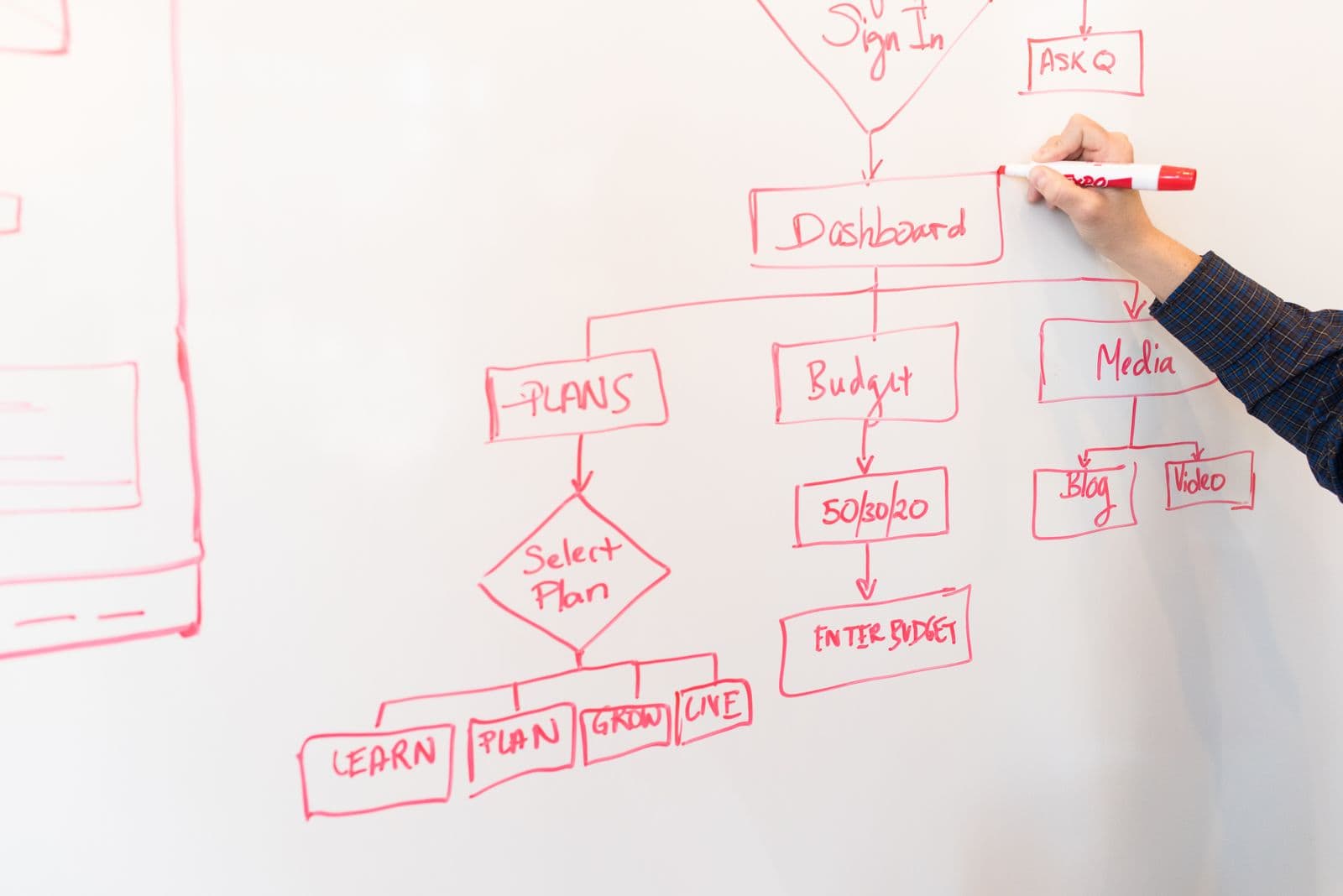
A workflow in n8n or Make is a flowchart: trigger, action, branch, next action. Somewhere in the middle sits an AI block that generates text or makes a decision.
That works well for tasks that look like an assembly line: form entry comes in, row goes into the spreadsheet, email goes out. If you have a task like that, a workflow tool is an honest solution.
But look at what you end up with: a technical system that you maintain yourself. Afterward, you're not the boss of an employee. You're the operator of a small piece of software, with everything that comes with it: debugging, broken connections after every API update, and a flow that nobody understands anymore after three months. The effort doesn't disappear, it just changes form: before, you did the task; now, you maintain the machine that does it. What I learned building an agent in n8n myself is in n8n AI Agent: What I Learned Building One.
The real problem is rarely an assembly line
The tasks that actually cost you time as a solo business owner look different: a proposal that has to respond to a client conversation. An inbox where the important needs separating from the unimportant. Content that should sound like you. A call that the right conclusions need to be drawn from.
These aren't procedures with fixed branches. These are jobs that need context and judgment. That's exactly why you haven't delegated them so far, not even to humans: the onboarding seemed like too much work.
For jobs like these, I don't build a flow. I hire an employee.
The other way: managing instead of building
My AI employees run on Claude, and the setup looks like this: the employee gets a job, a personnel file with everything it needs to know about my business, and an onboarding conversation where it asks its own questions. Then it works, I give feedback, and the feedback goes into the file. How that works in detail is covered in Hiring an AI employee: the complete process.
The difference from workflow building is fundamental:
The decisive point for me is the last row. A workflow can do exactly what it was built for. An employee with a good file can take on a variant of the task tomorrow that doesn't even exist today. Because its knowledge isn't stored in branches, it's stored in context.
And: you can read the personnel file. Your accountant could read it. At any time, you can see what your employee knows and what rules it works by. Show me the Make flow where that's still true after three months.
"Without code" applies here too, by the way
The employee path is not the techie path. Getting started happens entirely in the Claude app: load a package or describe the role, run the onboarding conversation, let it work. No servers, no API keys, not a line of code. Only later, when your employee needs to work directly with your files and systems, does Claude Code come in, and even then you don't write code, you keep managing in plain English.
I say this as a developer: I could build the flows. I chose employees anyway, and I haven't written a line of code myself in a year and a half. What my employees handle today is covered in My AI workforce, and why they run on Claude of all things in Claude instead of ChatGPT.
Bottom line
If your task is an assembly line: use a workflow tool, that's the honest lever there. If your task needs context and judgment, and for solo business owners that's almost always where the expensive hours are, then don't build an agent. Hire an employee.
How to do that, step by step and with no prior experience: Hiring AI employees.
Your first AI employee up and running within an hour
Join the community