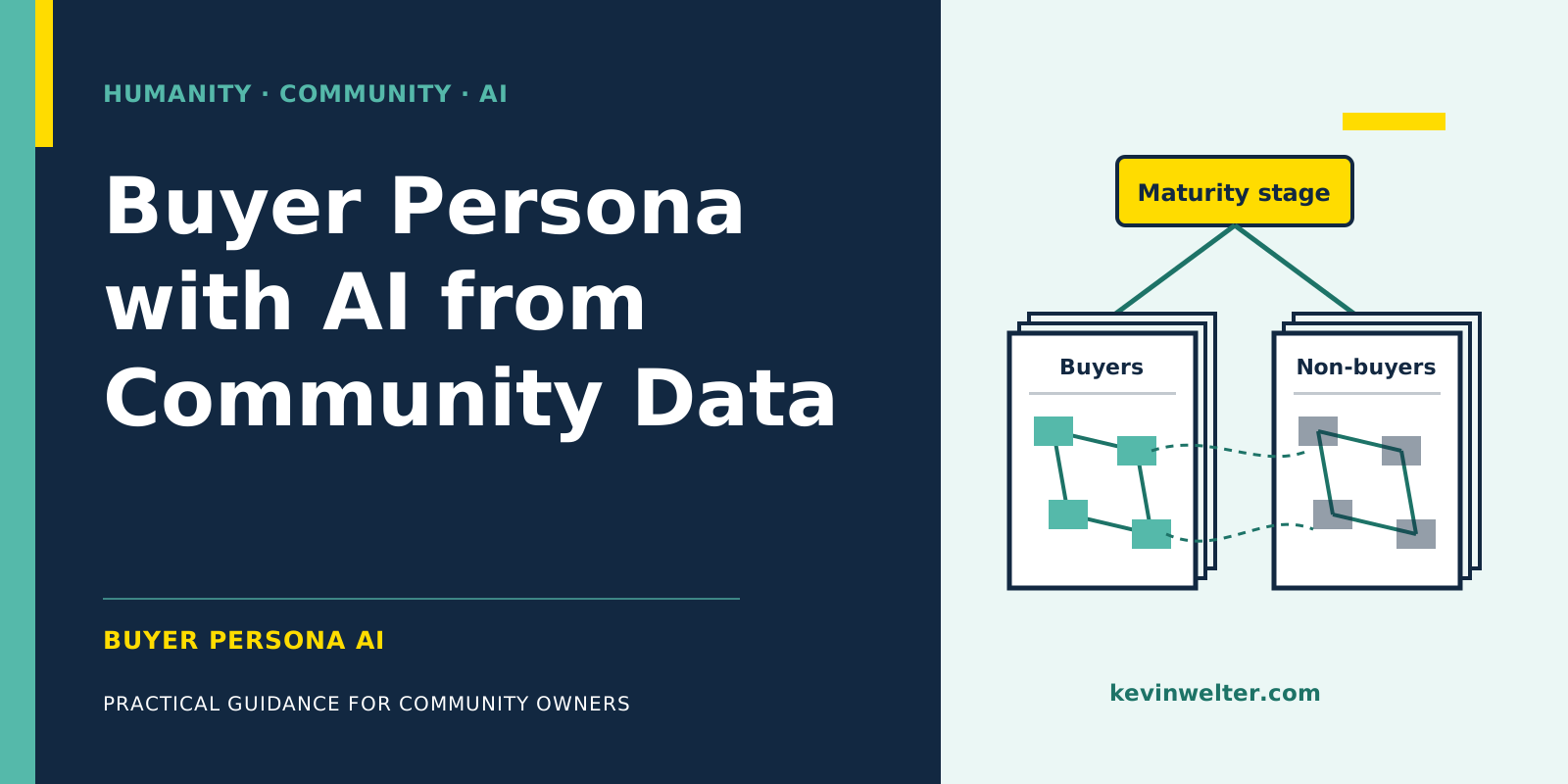
A buyer persona you build with AI gets more reliable when it comes from what your customers have already said, rather than from a questionnaire alone. A community has that material ready: posts, comments, call transcripts and answers to your membership questions. The AI breaks it into small linked notes and splits the people into buyers and non-buyers. The persona comes from the difference between those groups, not from the average of all members. A separate role then checks every claim against its source. The result is a customer persona with evidence: what buyers already had, when they decide, and why customers don't buy. If you rebuild this, consent, pseudonymization and local transcription come first. One limit stays: you only see people who were active.
With my AI workforce I analyzed a coaching community from my client base with a free and a paid area this way, buyers against non-buyers, then checked the result against my own community. Both cases are below, anonymized and without the client's figures. How the rest of my community work is split between me and my AI employees is covered in Community Management with AI Employees.
Why community data is the better foundation
The classic buyer persona is written at a desk: age, job, hobbies, an invented first name. It often describes the seller's wish list. A community gives you sentences people said long before they bought, plus the information about who bought later.
The comparison decides. Describe only buyers and you get traits non-buyers share too. Only the side-by-side shows what separates buyers, and that is the question a persona should answer for your offer, membership questions and ads.
I once put the standard like this in my community (translated from German): "The knowledge graph on its own is worthless if you don't derive insights and decisions from it." The guiding questions were in the same post: "Who bought and why? What problems did buyers have before? Where do members stand who haven't bought yet?"
Audience research for ads is about the market's language before first contact, covered in Audience Analysis for Ads: A Guide. This is customer research with AI on people who are already inside, and a solid basis for an ideal customer profile.
The raw material already sitting in your community
Skool allows up to three membership questions; how to design them is covered in Skool Onboarding: The First Seven Days. Skool's help center lists no export for posts and comments, as of September 2026.
My advice for every route: don't pull the feed with an automated tool. Skool's terms prohibit access with a "robot, spider, web crawler, extraction software, automated process" to "scrape, copy or monitor" content, and the platform policy prohibits "scraping data or making automation requests". Unofficial interfaces that promise exactly that run into these rules. What works officially is in Skool API and Automation: What Works. The principle works the same with Circle, Discord or a Facebook group.
Building a buyer persona with AI: the method in five steps
I demystified the knowledge graph in a community post (translated from German): "The fancy spinning cloud from the viral reels is really a boring folder full of text files. The magic is in the links: atomic notes, every note knows its neighbors." Here's how to rebuild it:
- Prepare the raw data. Transcripts and posts as text files in one folder. Normalize speaker labels and swap names for pseudonyms before a cloud model sees them.
- Break it into atomic notes. One note per question, objection, win, topic and call. The AI works through the material in sections and runs a second pass for what it missed the first time. Similar questions are merged into one core question.
- Link. Wikilinks between the notes: question to call, question to topic, person to question. The rule: no orphans, every note has neighbors. A folder of Markdown files in a notes app like Obsidian shows the network on its own.
- Form cohorts. Every person gets a label: buyer or non-buyer, finer if needed, for example buyers who came through the free area versus direct buyers. Then you ask each group the same guiding questions.
- Check backwards. A separate role with its own instructions takes every claim and looks for the passage in the source. Whatever doesn't hold gets removed or corrected. Only then does the AI write the persona.
In a hot seat session I advised several small, separate graphs rather than "one big pot", because statements from different sources otherwise contradict each other. If you want a graph database after all, modeling is covered in Build a Knowledge Graph From Calls.
Which model works and who checks
In the client case, a pilot ran first: the same material with a stronger Claude model and with a smaller one. The stronger model found clearly more questions. The small one missed more and also produced questions that had never been asked. So the whole extraction ran on the stronger model.
The check was taken as seriously as the extraction. Separate checking agents held every extracted item against the transcripts. Most errors were small timestamp details, plus items the first pass had missed. Further agents corrected them, and in the end no dead links were left. The analysis then fanned out: several sub-agents delivered partial findings on fixed guiding questions, with the synthesis in the main session.
Plan pilot and check as steps of their own: an unchecked persona can rest on invented sentences.
Six patterns from comparing buyers and non-buyers
These patterns came from the client case. They hold for that case; your own analysis shows whether yours looks the same.
The analysis had clear limits: only people who wrote or spoke were visible, "buyer" was an approximation based on activity in the paid area rather than a payment record, and matching people across sources was heuristic.
Why customers don't buy: usually a stage is missing
To me, the fourth pattern matters most. Buyers and non-buyers wanted the same outcome. The difference came earlier: buyers already had an offer, were already putting in the work without reaching the result, had already invested money and had a deadline. Those who didn't buy were mostly one stage earlier.
That turns the persona into a list of qualifiers instead of a portrait. Not age, job and hobbies, but: has an offer, is putting in the work, has invested, has a deadline. You can ask these as a membership question, check them in a first call and address them in an ad.
For ads, three rules followed: target the buyers' traits, not the free-member persona; name the situation of someone already acting and still stuck instead of promising the dream outcome; and sound calm rather than pushy, because the calm tone showed up in the analysis as a reason to buy. What that looks like for a Skool community in practice is in Running Meta Ads to a Skool Community. What the patterns mean for your pricing model is in Skool Community: Free or Paid?.
Privacy: the clean route if you rebuild this
Posts, transcripts and membership answers are personal data under the GDPR, even in a closed group, and under German criminal law (Section 201 StGB) recording private speech without authorization is an offense. The order I recommend:
- Consent before recording, with the purpose stated: analysis for your offer and communication. Consent is one of the legal bases under Art. 6 GDPR.
- Transcribe locally, for example with Whisper on your own machine, so the raw transcript doesn't go to a cloud.
- Pseudonymize before a cloud model sees the text: names become roles, companies become industries, private matters like health or finances come out.
- Analyze in aggregate: patterns instead of quotes. I only use member quotes with their consent; a first name is enough then.
- Stay deletable: you always know which call belongs to which person.
Pseudonymized data stays personal data while re-identification is possible (GDPR Recital 26). The procedure is in Call Analysis with AI: The Pattern Register, the legal side in Transcribing Calls: What German Law Says. I'm a developer, not a lawyer; this isn't legal advice.
Carried over to my own community
I don't copy the client's traits, but I reuse the mechanism. In August, Susi analyzed the transcripts of our coffee calls and the feed posts and built a small graph. The core finding in her words (translated): "The community isn't made of people curious about AI, but of paying Claude owners who can't get the most out of their subscription." Recurring questions: which plan and model, Chat or Cowork or Code, why Claude "forgets", how to set up an AI employee, how AI text stops sounding like AI, how to structure knowledge, and data protection.
The second source is the membership question "What do you want to tackle first with Claude?". Most buyers from my ad test answered along the lines of: build the first employee. No persona template would have given me that sentence.
One lesson from the opposite side: my poll "What has actually saved you time here?" got no answers. The real success stories came unprompted, in posts where members showed results. Watching tells you more than asking. Which numbers Skool itself provides is covered in Skool Analytics: Reading Posts and Members.
Susi does this for me, the decision stays with me
Susi is my AI employee for Meta ads, and for her the persona is groundwork before any ad copy. She ran the community analysis in the client case, analyzed my coffee calls and derived ad rules from the patterns. Whatever she builds starts paused. I switch it live, and I decide which conclusions change an offer.
If you want to analyze conversations, Gustav turns the process from the privacy section into a ready-made role, working in small batches with spot checks after each. Whoever creates doesn't check their own work; that's a house rule for everything that leaves the building.
Frequently asked questions
How do I create a buyer persona with AI?
Collect real material from your community, meaning membership answers, call transcripts and posts, and mark who bought. Let the AI break it into small linked notes and compare both groups with the same guiding questions. The persona describes the difference. A separate checking role then holds every claim against its source.
What's the difference between a buyer persona and a customer persona?
In everyday use they mean the same: a description of the people who buy from you. What matters is the foundation. A persona written at a desk often describes a wish list. A persona from community data describes what separates buyers from non-buyers, with a source for every claim, so you can use it directly in membership questions and ads.
Why don't customers buy even though they're active in the community?
In the client case, non-buyers wanted the same as buyers but were one stage earlier: no offer yet, not putting in the work yet, nothing invested, no deadline. On top of that, purchases clustered on event days and a small entry offer absorbed buying energy. Whether that holds for you only the comparison of your own groups will show.
Am I allowed to analyze community posts with AI?
That depends on your legal basis, consent and the platform's rules. On Skool, the terms prohibit automatically pulling the feed. Use official routes such as the export of membership answers and your own recordings with consent, pseudonymize before the analysis and keep results aggregated. This isn't legal advice.
Where to go from here
Export the answers to your membership questions and mark who bought. Put both groups into two files and ask Claude for three differences, each with the line it comes from. Then check three random claims against the source yourself. If they hold, you have the core of your persona. How Susi and Gustav work on this, and how to use them for your own community, I show in Claude Practitioners. The community is in German, and you won't be alone with your first analysis: in the calls we go through comparisons like this together.